
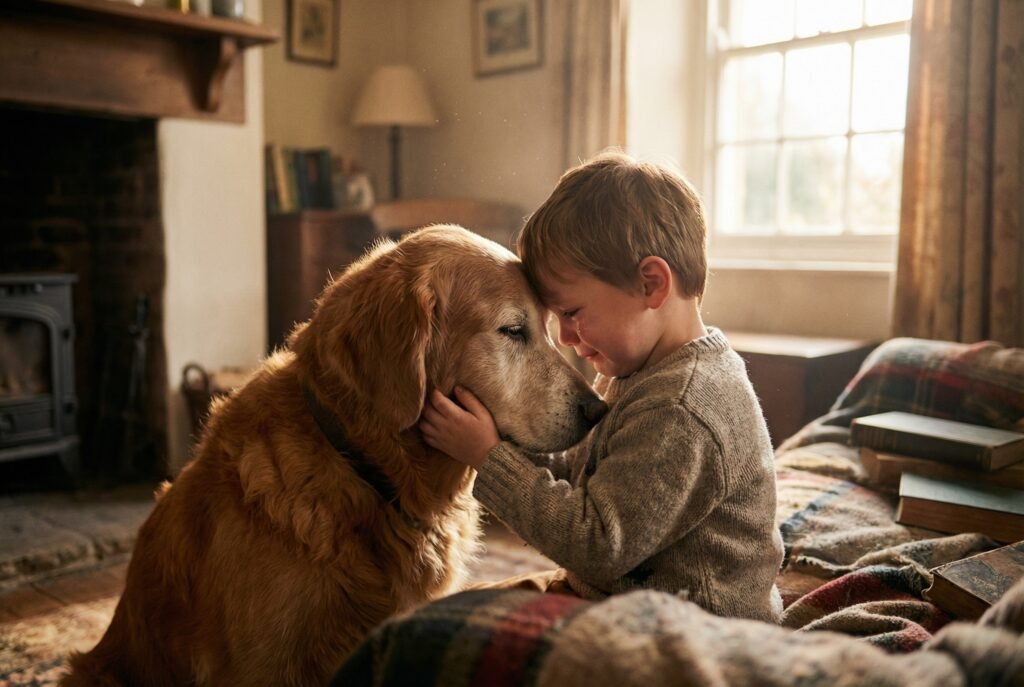
Children and Pet Loss: How to Talk to Kids About Saying Goodbye
The moment a family pet dies, parents are often faced with two heartbreaks at once: their own grief, and the responsibility of guiding their child through theirs.
There is no perfect script for this conversation. Every child is different. Every family’s bond with their pet is unique. But there are gentle, honest ways to walk alongside a child through their first real encounter with death — and to help them come out the other side with their heart intact, not hardened.
This guide is not about making the conversation painless. Loss is painful. But it can be handled with tenderness, honesty, and the quiet reassurance that love doesn’t end when a life does.
Why This Conversation Matters
For many children, the death of a pet is their first experience with loss. How we handle it shapes not only how they grieve this particular companion, but how they understand grief for the rest of their lives.
If we avoid the conversation, children may feel confused or abandoned in their sadness. If we rush to replace the pet, they may learn that love is interchangeable. If we hide our own tears, they may learn that grief is something to be ashamed of.
But if we sit with them in the messiness of saying goodbye, if we answer their questions honestly, hold space for their tears, and let them see that it’s okay to be sad, we give them something invaluable: permission to feel, and the knowledge that they are not alone in their pain.
When to Have the Conversation
Ideally, before the loss happens.
If your pet is aging or terminally ill, start the conversation early. Use gentle, age-appropriate language to explain that [Pet’s Name] is very old or very sick, and that their body is slowing down. Explain that one day, probably soon, their body will stop working entirely, and that when that happens, they will die.
This isn’t cruel. It’s preparation. Children who understand what’s coming are often less shocked and more able to process their feelings when the moment arrives.
If the loss is sudden — an accident, a rapid illness, an unexpected euthanasia, the conversation will happen in the aftermath. That’s okay too. You can only work with the information you have.
What to Say: Age by Age
Ages 2–4: Keep It Simple and Concrete
Very young children don’t yet understand the permanence of death. They may ask when the pet is coming back. They may seem fine one moment and devastated the next.
What to say: “[Pet’s Name]’s body stopped working. They died. That means we can’t see them or pet them anymore. But we can still love them and remember them.”
What to avoid: Euphemisms like “went to sleep” or “went away.” These can confuse a young child, who may become afraid of sleeping or of being left behind.
Ages 5–8: Answer Questions Honestly
At this age, children begin to understand that death is permanent. They may ask surprisingly direct questions: “What happens to their body?” “Will I die too?” “Where did they go?”
What to say: Answer honestly, but simply. “Their body was buried/cremated. We put their ashes in a special urn so we can keep them close.” If you have religious or spiritual beliefs, you can share them gently. If you don’t, it’s okay to say, “No one knows for sure what happens after death, but I believe the love we shared never goes away.”
What to avoid: Over-explaining. Give a simple answer, then pause. Let them ask the next question if they have one.
Ages 9–12: Invite Them Into the Process
Older children can handle more detail. They may want to be involved in decisions — choosing an urn, picking a spot in the garden, deciding what to do with the ashes.
What to say: “This is hard for all of us. What would feel right to you? Would you like to help me choose the urn? Draw a picture to put next to it? Write a letter to [Pet’s Name]?”
What to avoid: Assuming they don’t want to be involved. Ask. Let them lead.
Teenagers: Grieve Alongside Them, Not at Them
Teens may pull away. They may seem cold or dismissive. They may cry alone in their room and act fine at dinner. This is normal. Adolescence is already a time of emotional complexity. Pet loss can feel like an additional weight they don’t know how to carry.
What to say: “I know you loved [Pet’s Name]. I’m here if you want to talk. And I’m also here if you just want to sit in silence.” Then follow through. Don’t force conversation. Be available.
What to avoid: Criticizing how they grieve. If they want to play video games for an hour after hearing the news, let them. Processing happens in its own time.
What Not to Say
There are a few common phrases that well-meaning adults often use — and that often backfire.
“God needed another angel.”
To a grieving child, this can sound like God took their pet on purpose. It may create fear or resentment.
“Don’t cry. They’re in a better place.”
Crying is healthy. Telling a child not to cry teaches them that their feelings are wrong. And “better place” can feel abstract and unsatisfying.
“We’ll get you another one.”
This suggests that love is replaceable. Even if you plan to adopt another pet eventually, wait until the initial grief has softened before introducing the idea.
“You’re the man of the house now. You have to be strong.”
This teaches children — especially boys — that grief is weakness. It isn’t. Let them cry.
How to Memorialize Together
Creating a ritual or a physical tribute can help children externalize their grief. A few ideas:
Draw or paint a picture of the pet and place it near the urn
Write a letter saying goodbye, then fold it and tuck it under the urn
Plant a small tree or flowers in the pet’s favorite spot in the yard
Create a memory jar — each family member writes down a favorite memory and puts it in the jar
Hold a small ceremony — light a candle, say a few words, share a story
Let them help choose the urn — if you’re ordering a custom urn, invite them to look at photos of the portrait with you
The goal isn’t to “fix” their sadness. It’s to give it a container. A place to go.
What About Your Own Grief?
Parents often feel pressure to hide their tears — to “be strong” for their children. But children learn how to grieve by watching the adults around them.
If you cry, that’s okay. If you say, “I’m really sad too. I miss [Pet’s Name] very much,” that’s not a burden to your child. It’s a gift. It shows them that sadness is not dangerous. That love and loss can coexist. That being sad doesn’t mean you’re broken.
Of course, there’s a balance. If you’re overwhelmed, it’s okay to take a moment to yourself. But don’t feel you have to perform stoicism. Your honest grief may be exactly what your child needs to feel safe in their own.
When to Seek Help
Most children process pet loss naturally within a few weeks or months. But sometimes, grief lingers in ways that suggest professional support might help.
Consider reaching out to a child therapist or grief counselor if your child:
Is still intensely distressed after several months
Shows significant changes in eating or sleeping
Withdraws from friends or activities they used to enjoy
Talks about wanting to join their pet in death
Develops new fears (of sleeping alone, of other pets dying, of your leaving and not returning)
Trust your instincts. You know your child better than anyone.
A Final Thought
You will not get this conversation perfectly right. You may stumble over words. You may cry when you meant to be calm. You may answer a question only to realize later that you wish you’d said something different.
That’s okay.
What your child will remember is not your exact phrasing. They will remember that you were there. That you held them. That you didn’t look away from their sadness.
They will remember that even in the hardest goodbye, love was the thing that stayed.
And that is the most important lesson grief has to teach.
At Paw & Clay, we believe that extraordinary love deserves an extraordinary way to be remembered. If your family is considering a custom urn to honor a beloved pet, we would be honored to help you create something beautiful — for your child, for yourself, and for the companion who will always be part of your story.